
UX/UI · Conversational Design · BranDING
What if a website
could talk back?
Reimagining the digital identity of Touxa through a hybrid experience
that combines traditional navigation with conversational AI.

Client
Touxa

Year
2025

Role
UX/UI Designer · Conversational Designer
Touxa is a digital experience born from the rebranding of MyCX, a technology-driven reality focused on Service Design and Customer Experience.
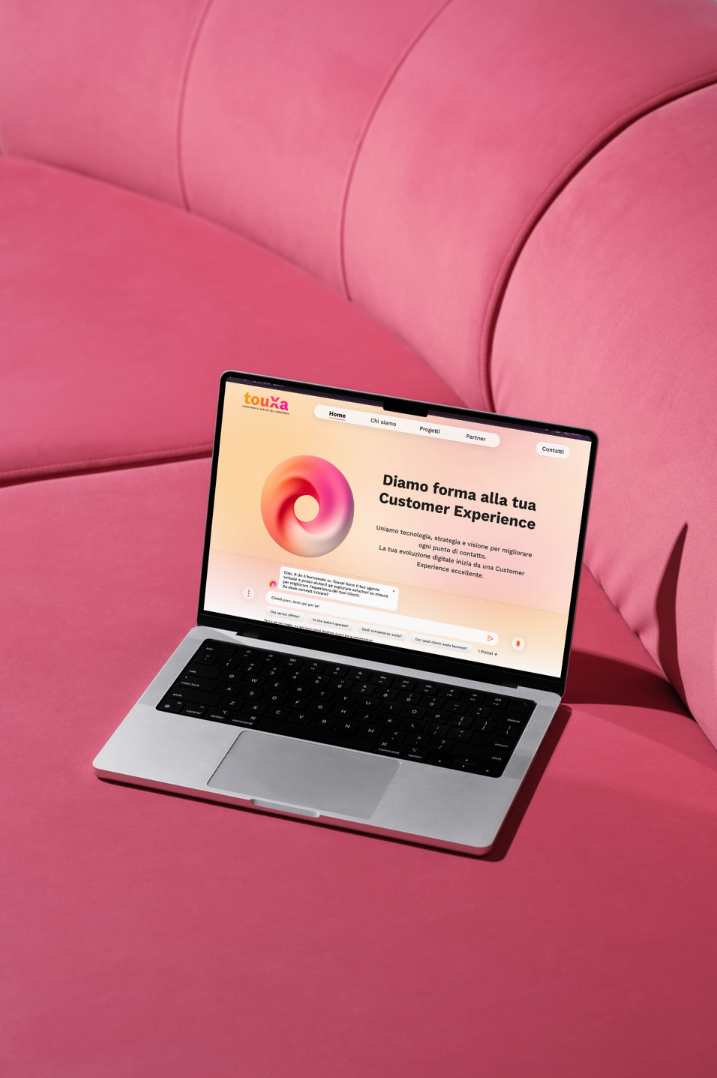
The project involved creating a new identity for Touxa and translating it into a digital experience that could communicate its services, expertise and values in a more engaging way.
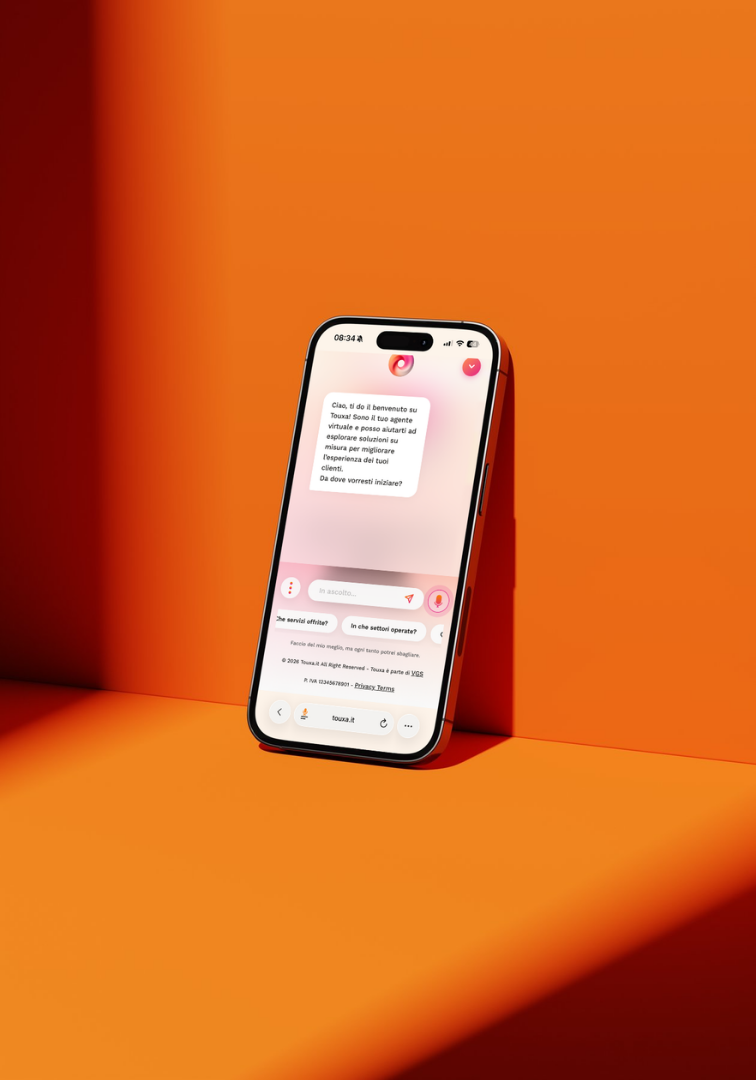
I explored how conversational AI could become more than an additional feature — it could become a new interaction model for the brand itself. The result was a hybrid experience that combines the familiarity of traditional interfaces with the naturalness of conversational interaction.
⌁ The challenge
How can a new brand become an experience?
The challenge was not simply to design a new website, but to explore what the digital presence of Touxa could become.
The team wanted to introduce an AI-powered conversational interface as part of the experience. This opened up new possibilities for how people could discover the company, but also raised an important question: how could conversation be introduced without making the experience confusing or difficult to navigate?
I needed to find a balance between a familiar website structure and a new conversational way of interacting with the brand.

BRAND Identity
01 — A new identity for a new reality
Touxa needed a distinctive identity that could express its technological, human-centred and constantly evolving nature.
Digital Experience
02 — A new way to experience the brand
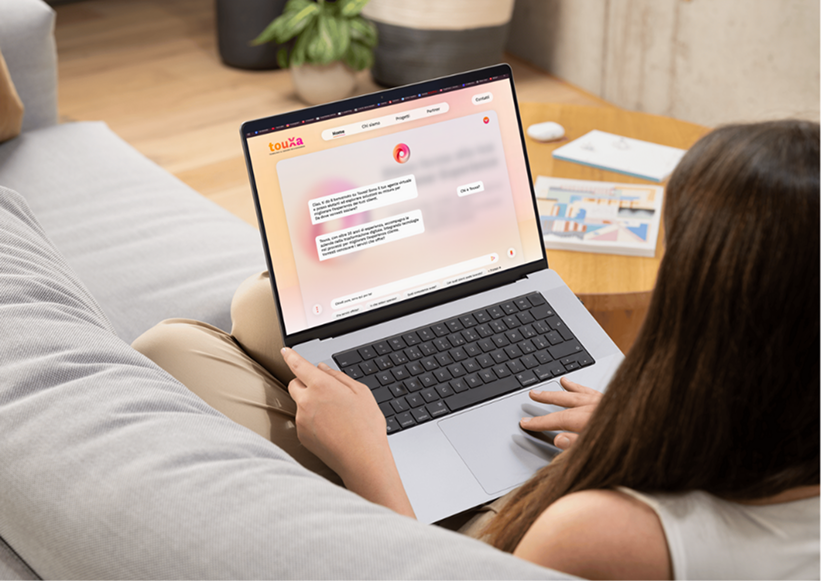
The challenge was to translate the new brand into a digital experience where people could discover, navigate and interact with Touxa in new ways.
⌁ THE APPROACH
Understanding before designing
Stakeholder interviews · Workshop · Content mapping · Conversational research
I started by exploring what Touxa needed to communicate and how its digital experience could support different users and intentions.
I conducted semi-structured interviews with internal stakeholders to understand the new identity, its values and its future direction. I also facilitated a collaborative workshop to collect and organise content, services and possible user needs, followed by content mapping and flow exploration.
Alongside the stakeholder work, I researched conversational interfaces, data collection and privacy, and looked at existing approaches to understand how conversational interaction could work within a professional digital experience.
⌁ Defining the experience
How should people experience a brand built around conversation?
The research highlighted an important tension. Conversation could make the experience more direct and engaging, but a completely conversational interface could also disorient users who were unfamiliar with this type of interaction.
Rather than choosing between a traditional website and a conversational interface, I explored a hybrid model combining GUI and CUI.
The graphical interface would provide structure and orientation, while the conversational layer could make exploration more flexible and personal.
This became the foundation for the experience.
From users to interactions
Personas · User journeys · Information architecture · Interaction flows
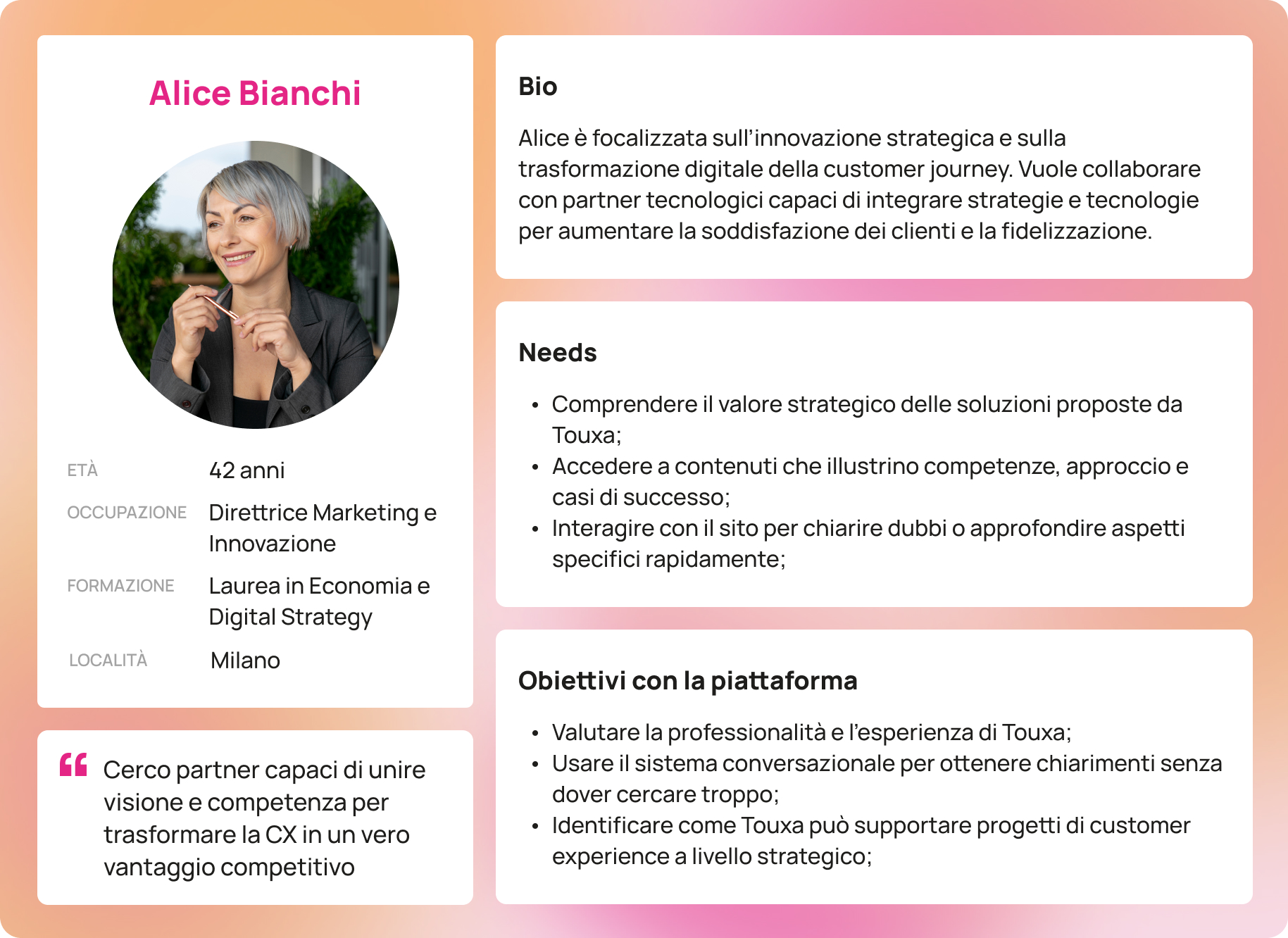
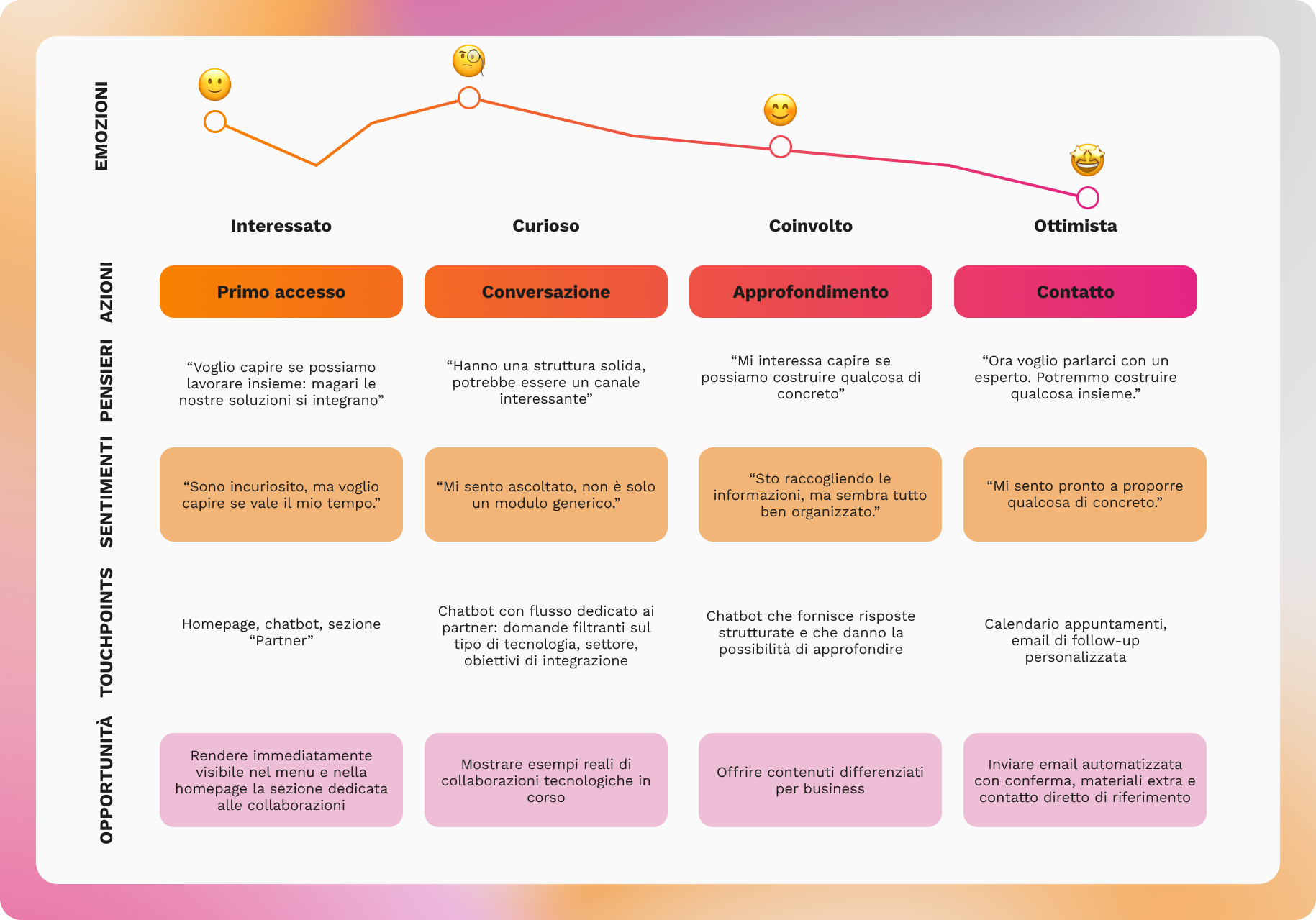
To translate the concept into concrete scenarios, I developed personas and user journeys representing different reasons for visiting Touxa. Some users might want to understand the company’s services or explore its case studies. Others might be looking for a partner, specific expertise or a way to get in touch.
Mapping these different intentions helped me understand where conversation could genuinely support the journey and where traditional navigation was still the better choice.
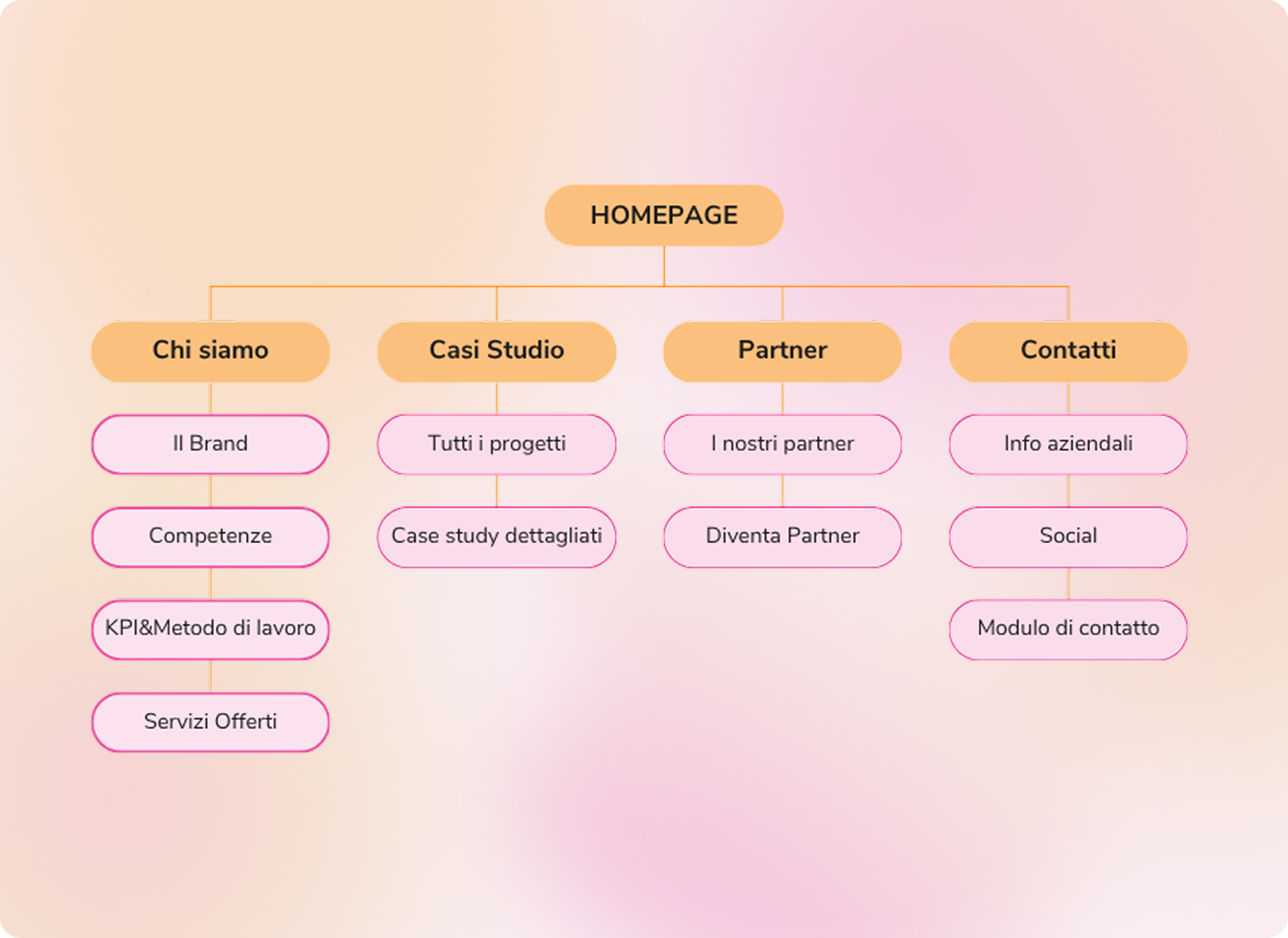
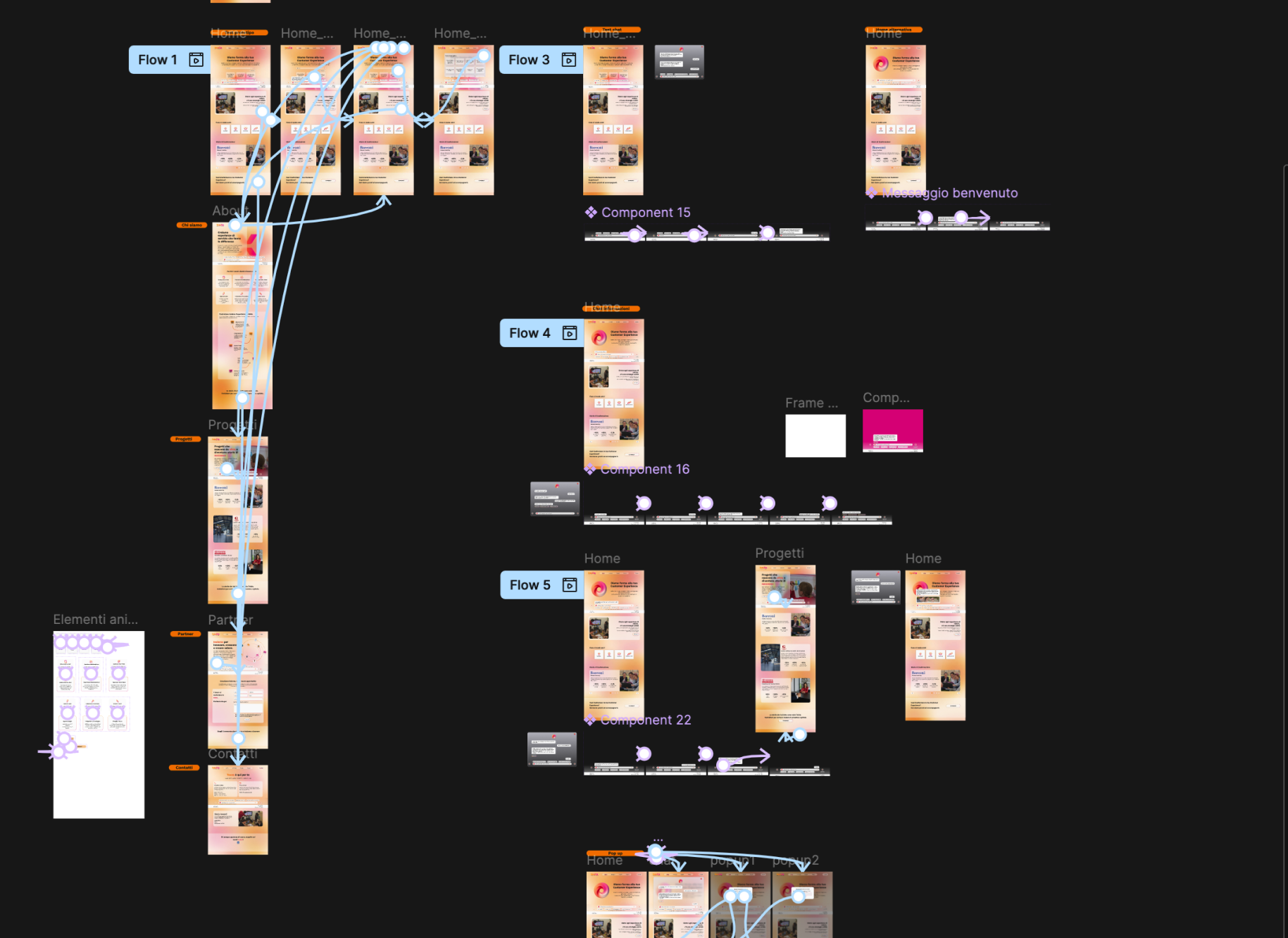
I then defined the information architecture and interaction flows, creating the structure within which the conversational experience would live.
⌁ Designing the conversational experience
What happens when the brand can speak?
The conversational agent became an extension of Touxa’s identity rather than simply an AI feature added to the website.
I defined its personality, tone of voice and conversational behaviour, aiming for an interaction that felt professional and reliable while remaining clear, approachable and human.
The agent was designed as a neutral, genderless guide through the Touxa experience. It could introduce the company, suggest relevant content, answer questions and help users move through the website. I also defined conversational principles around clarity, context, cooperation, error tolerance and turn-taking to make the interaction feel useful rather than intrusive.
From sketches to interface
Sketching · Wireframing · UI Design · Conversational Design · Prototyping
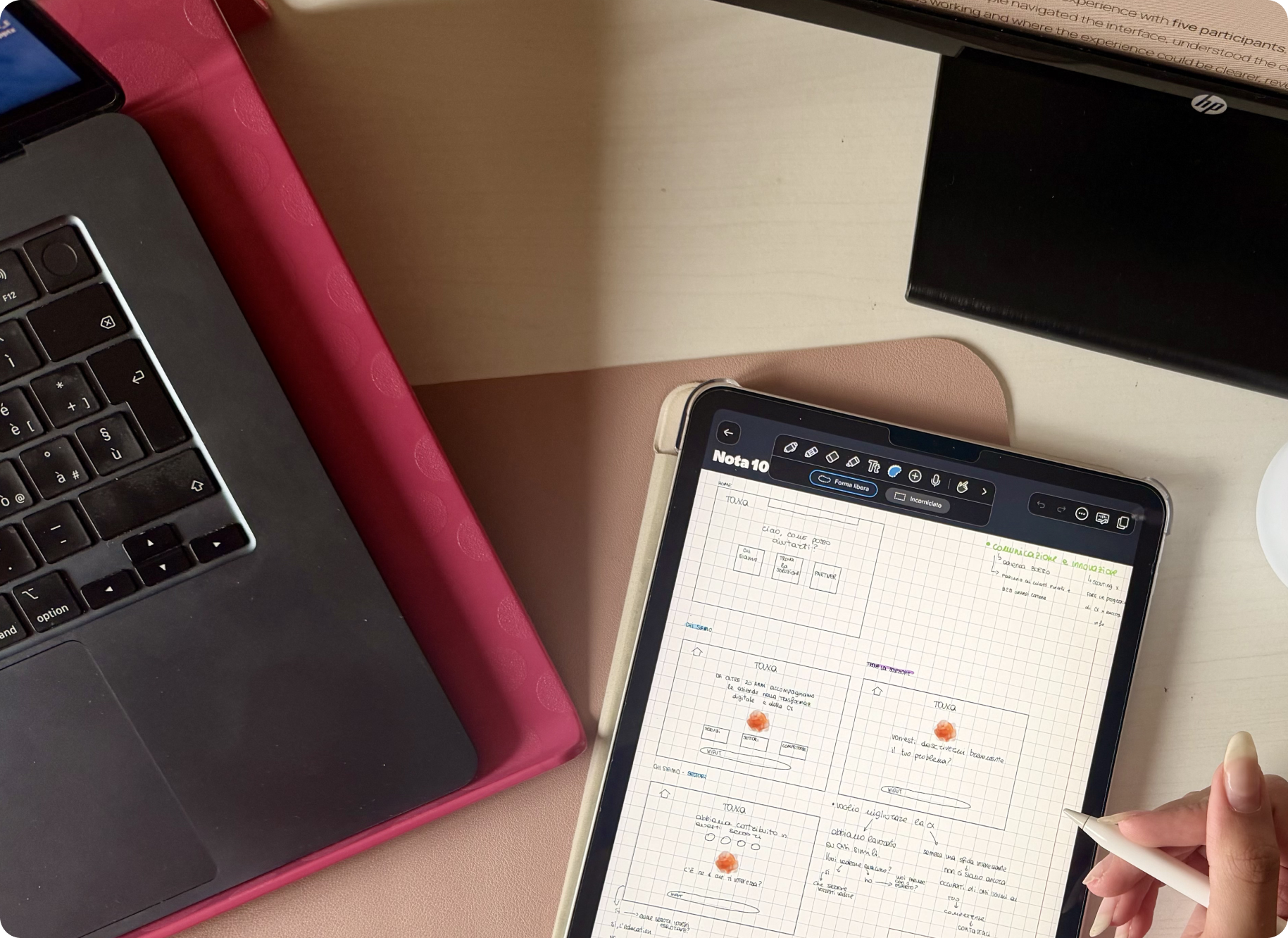
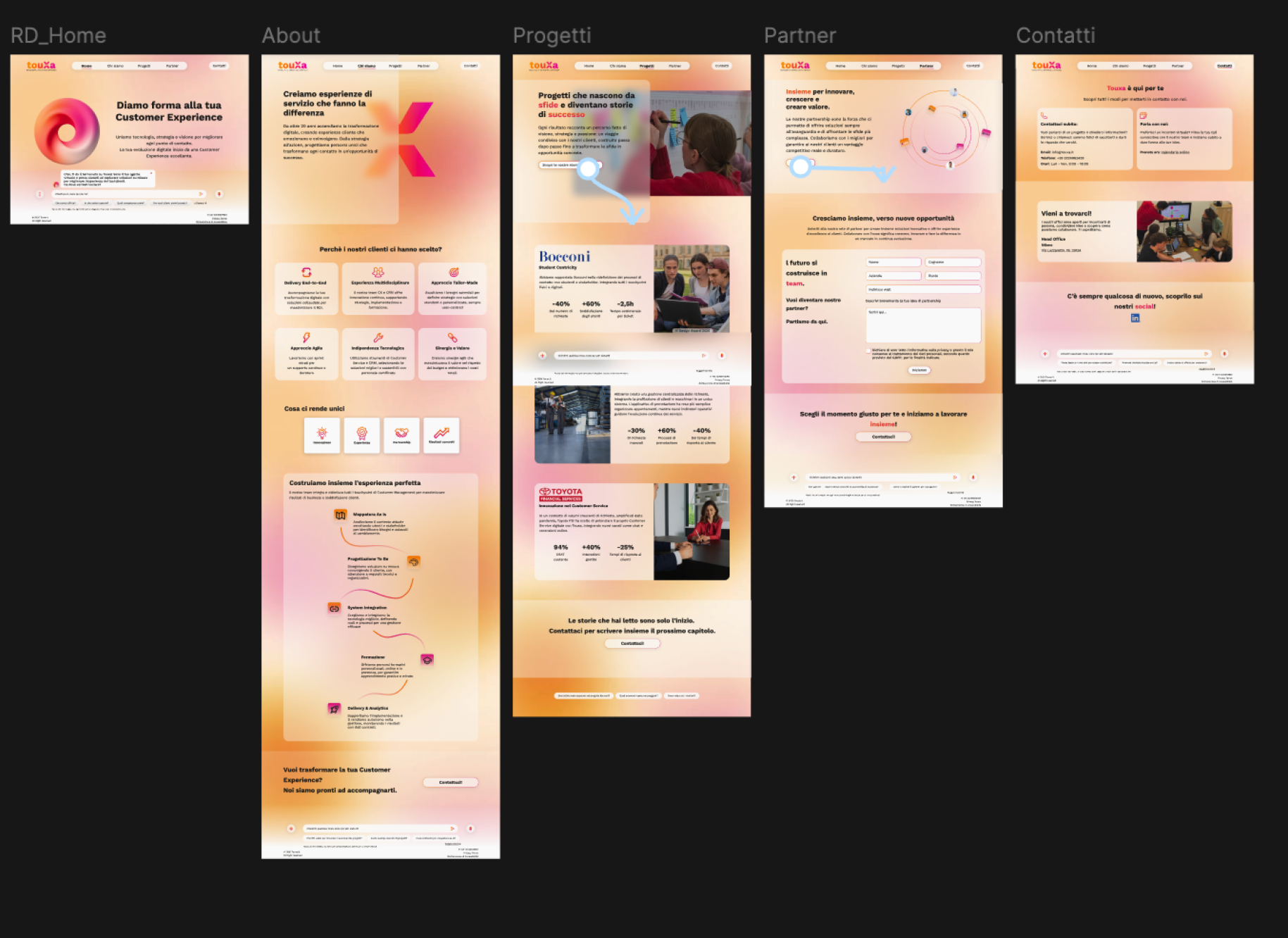
I started exploring the experience through manual sketches, testing different ways of presenting content and combining traditional navigation with conversational interaction.
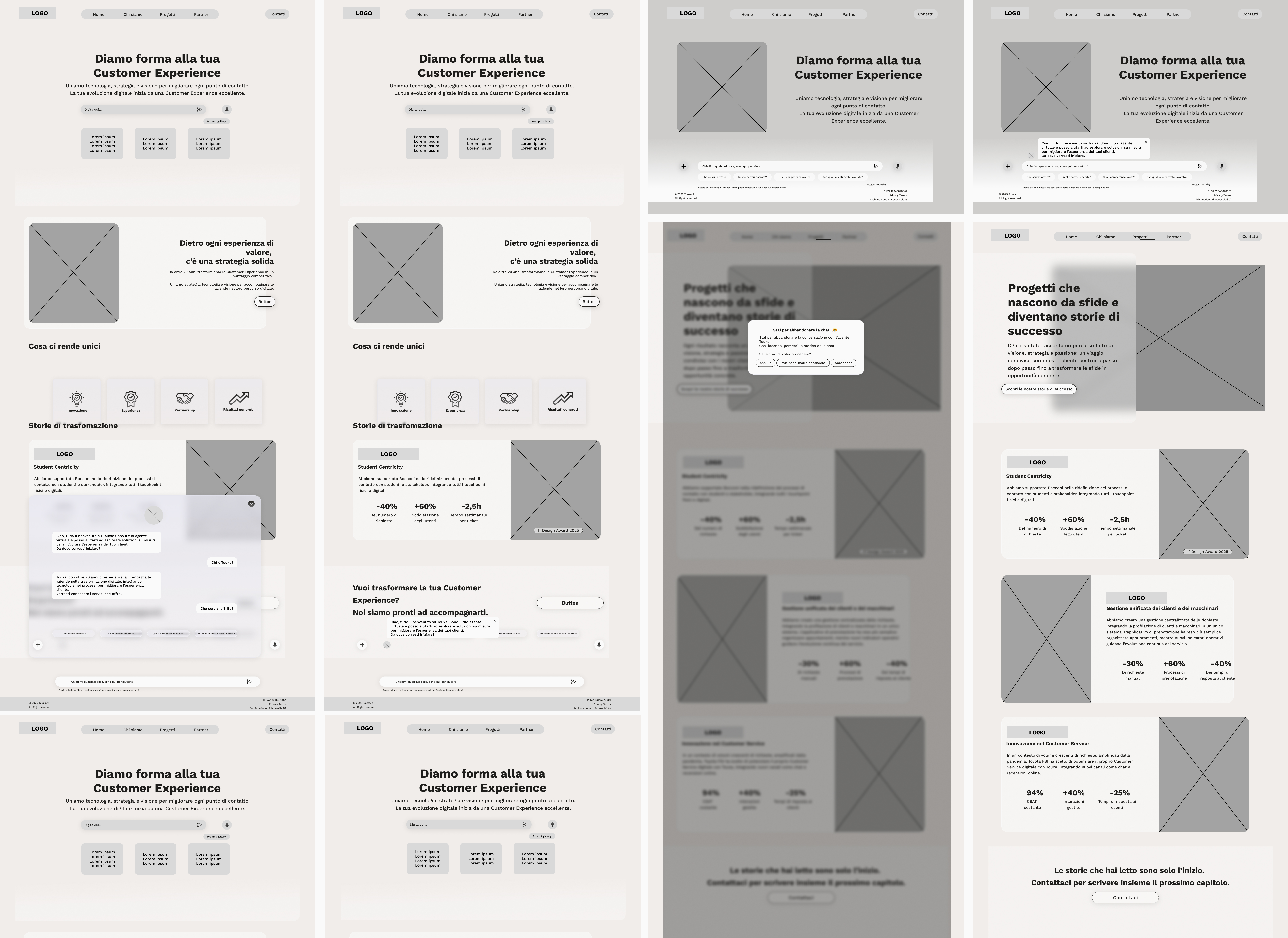
From these explorations, I developed the information architecture, wireframes and visual interface, progressively moving towards a high-fidelity prototype.
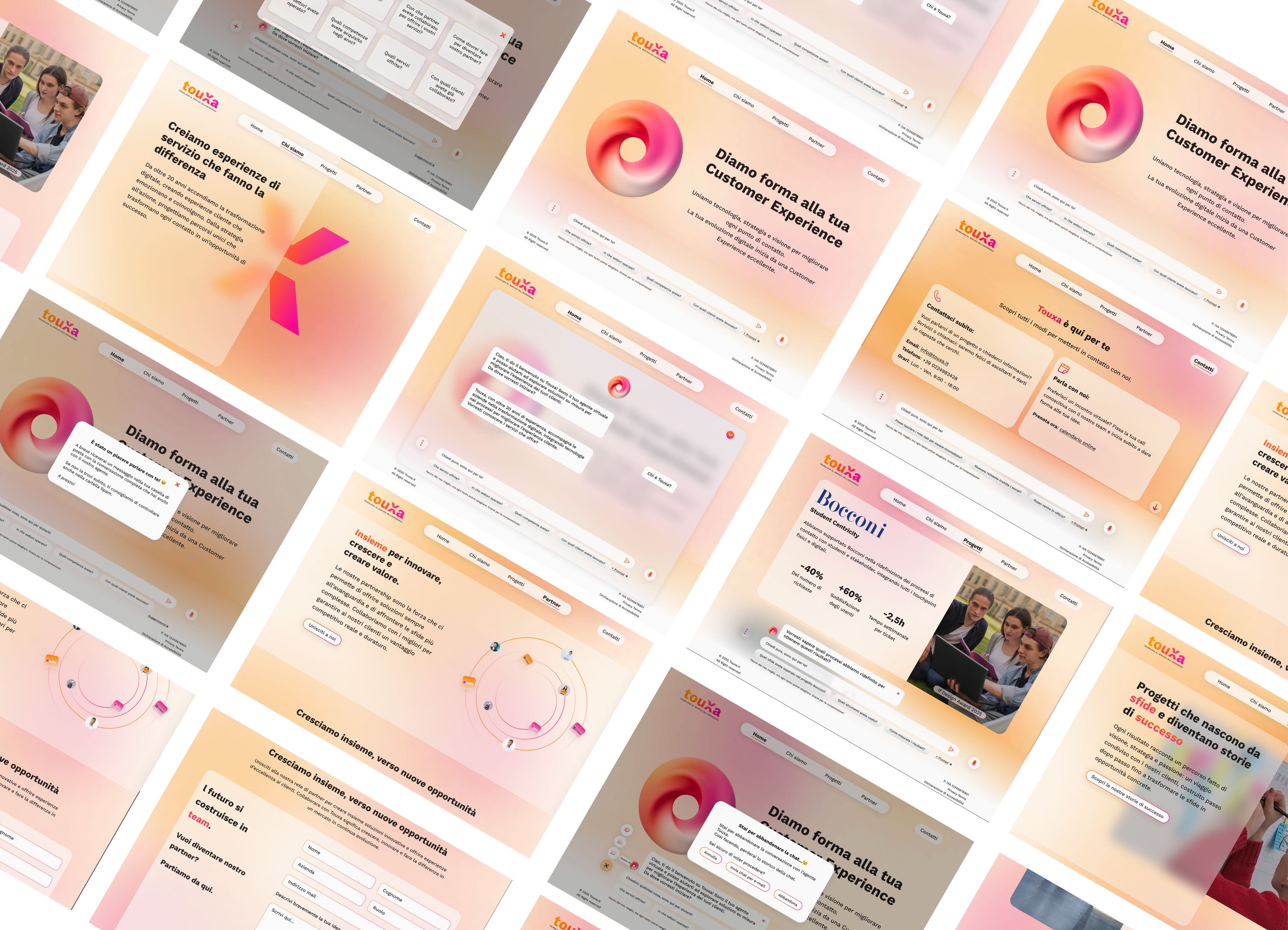
The interface included traditional navigation alongside the conversational agent, suggested prompts, text and voice input, contextual guidance and an AI disclaimer.
I also explored how the conversation could support lead generation. Instead of presenting a traditional form immediately, the agent could progressively collect relevant information — such as name, company and contact details — as part of the conversation.
⌁ Testing and iteration
Would people actually understand it?
Usability testing · Think-aloud · Observation · Feedback · Iteration
Once the high-fidelity prototype was ready, I tested the experience with five participants, using around 12 tasks, think-aloud and follow-up questions.
The sessions allowed me to observe how people navigated the interface, understood the conversational agent and approached different interactions. The feedback highlighted both what was working and where the experience could be clearer, revealing assumptions that were not always visible during the design process.
I used these findings to refine the interaction model and interface, improving clarity, hierarchy and the relationship between traditional navigation and conversation.
⌁ Outcome
From a rebrand to an interaction model
Touxa became a new digital identity and an exploration of how branding, interaction and conversational AI could work together within one experience.
I contributed to the project across the design process — from stakeholder research and content definition to personas, user journeys, interaction design, conversational behaviour, UI design, prototyping and usability testing.
The final concept combined the familiarity of a traditional website with the flexibility of conversational interaction, allowing users to choose how they wanted to discover Touxa.
⌁ TAKEAWAY
Designing beyond the screen
Touxa pushed me to think about interaction not only in terms of screens and interfaces, but also in terms of language, behaviour, trust and system responses. Designing for conversational AI meant designing a relationship between the user and the system — deciding when it should speak, what it should say and when it should step back.
The project reinforced an approach I want to carry into future work: new technology does not have to replace familiar interactions. It can make an experience more meaningful when the two are designed to work together.
⌁ The project in action
See the idea come to life
Explore how the new visual identity and conversational experience come together in the final product.
⌁ TASTE THE PROJECT
Where ideas become
experiences
See how the new visual identity, interface
and conversational experience come together.