
Interaction Design
Making everyday meal planning
a little easier
Designing a supportive food experience for informal caregivers, helping them plan meals, manage ingredients and reduce the cognitive load of everyday cooking.

Client
University Project

Year
2025

Role
Interaction Designer · UX/UI Designer
Foodist explores how digital tools can support informal caregivers who prepare meals for older adults.
Preparing a meal means more than choosing a recipe. It involves remembering preferences, checking ingredients, considering allergies and intolerances, planning what to buy and making sure the meal is appropriate for the person being cared for.
The project focused on turning this complexity into a more connected and manageable experience, combining meal planning, pantry management, shopping and personalisation in one system.
⌁ The challenge
How can technology make meal preparation easier without adding another task?
Preparing meals for an older person involves much more than finding something to cook. Caregivers need to consider preferences, nutritional needs, allergies and intolerances, while also keeping track of what is already available at home and what needs to be bought.
The challenge was to bring these different decisions together without making the experience feel even more complicated.

REDUCING COGNITIVE LOAD
01 — Less to remember, less to manage
Foodist needed to support the small decisions surrounding meal preparation, helping caregivers organise information and make choices without having to keep everything in mind.
CONNECTING THE EVERYDAY
02 — Making meals simpler
Foodist needed to connect what caregivers already have with what they need to do next — from checking the pantry to choosing a recipe or creating a shopping list.
⌁ THE APPROACH
Understanding the problem before designing the solution
Literature review · Interviews · Grounded theory · Qualitative analysis
I started by exploring the relationship between caregiving, nutrition and everyday meal preparation.
I conducted a literature review on geriatric nutrition, caregiver wellbeing and inclusive design, followed by interviews with people involved in meal preparation and qualitative analysis using grounded theory.
The research highlighted recurring challenges around time, uncertainty and organisation. Caregivers often had to remember several pieces of information at once, worry about making mistakes and spend unnecessary effort organising what to cook and what to buy.
Rather than adding another tool to manage, the opportunity was to design something that could reduce the organisational effort already involved in the task.
⌁ Defining the experience
How can technology support caregivers without becoming another task to manage?
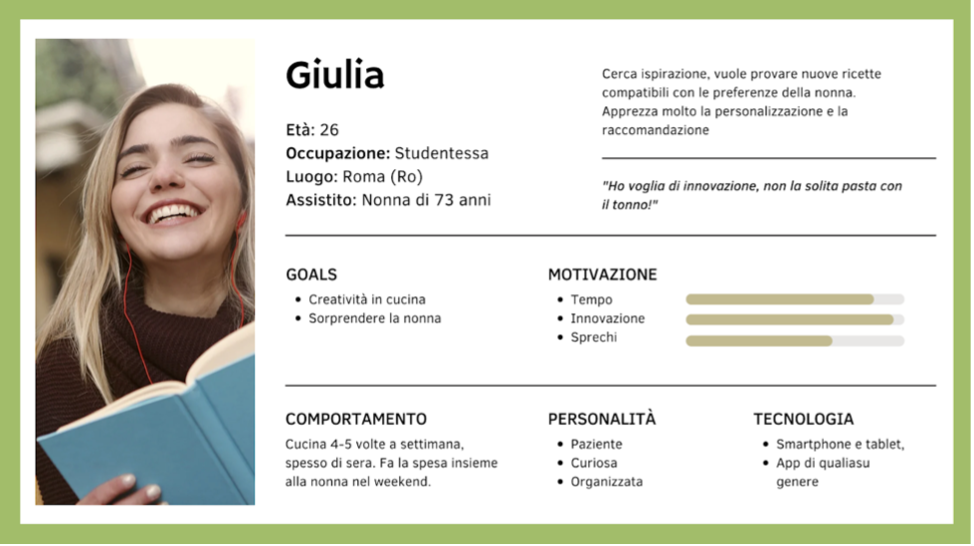
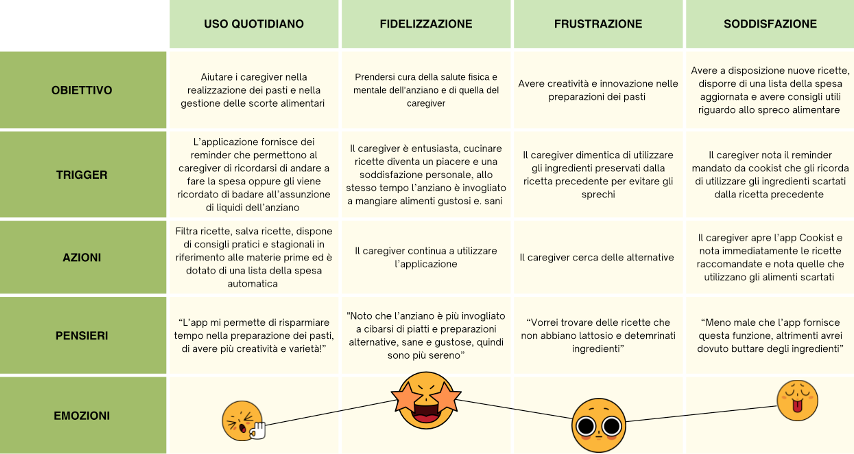
To translate the research into a concrete design direction, I developed personas and user journeys representing different caregiving contexts and routines.
Mapping the experience helped reveal that the main problem was not simply finding recipes. It was connecting several decisions that were already happening around the meal: who I am cooking for, what I have available and what I need to do next.
This became the foundation for the concept.
From needs to interactions
Personas · User journeys · Card sorting · Information architecture
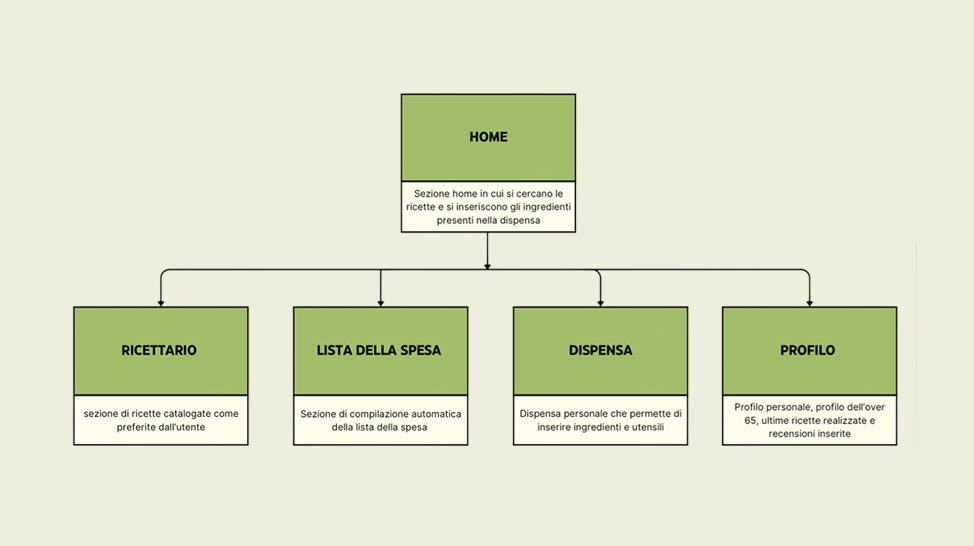
I used card sorting to explore how the different pieces of information could be organised from the user’s perspective, then defined an information architecture around five main areas:
The structure created the foundation for a more connected experience, where information about the person being cared for and ingredients available at home could directly influence what the user could do.
⌁ Designing the experience
What if the pantry could become the starting point?
Sketching · Wireframing · UI Design · Prototyping
The concept grew around two familiar metaphors: the recipe book and the pantry.
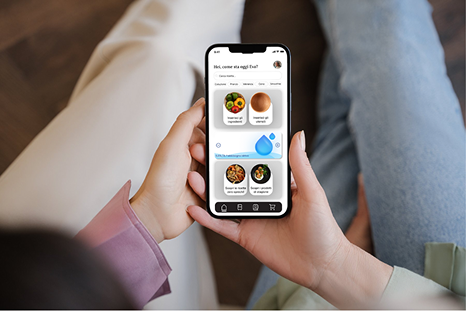
Instead of asking users to begin with an empty search, Foodist could start from what they already had at home. Available ingredients could lead to relevant recipes, while the assisted person’s profile could help filter out unsuitable ingredients and account for personal preferences.
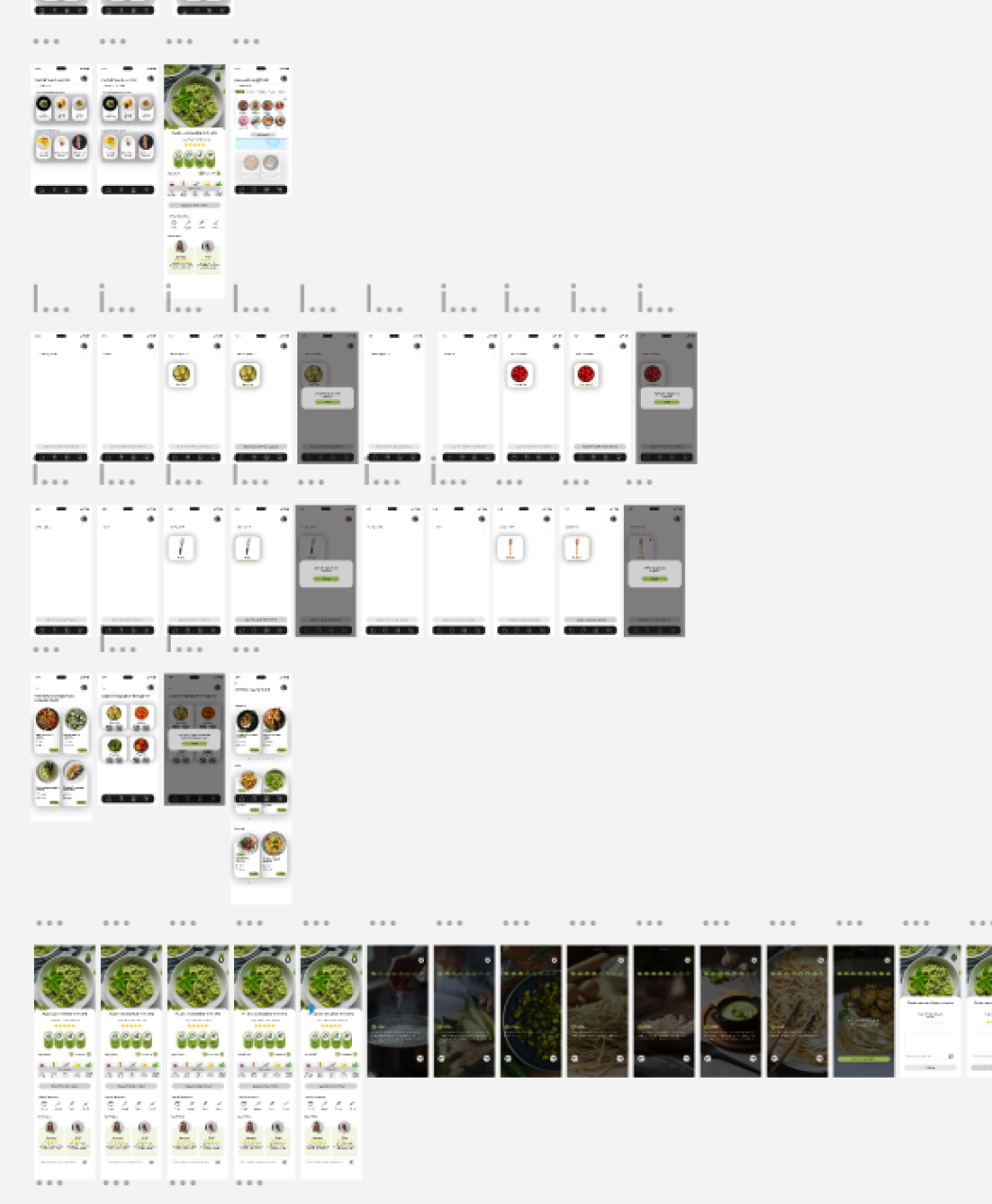
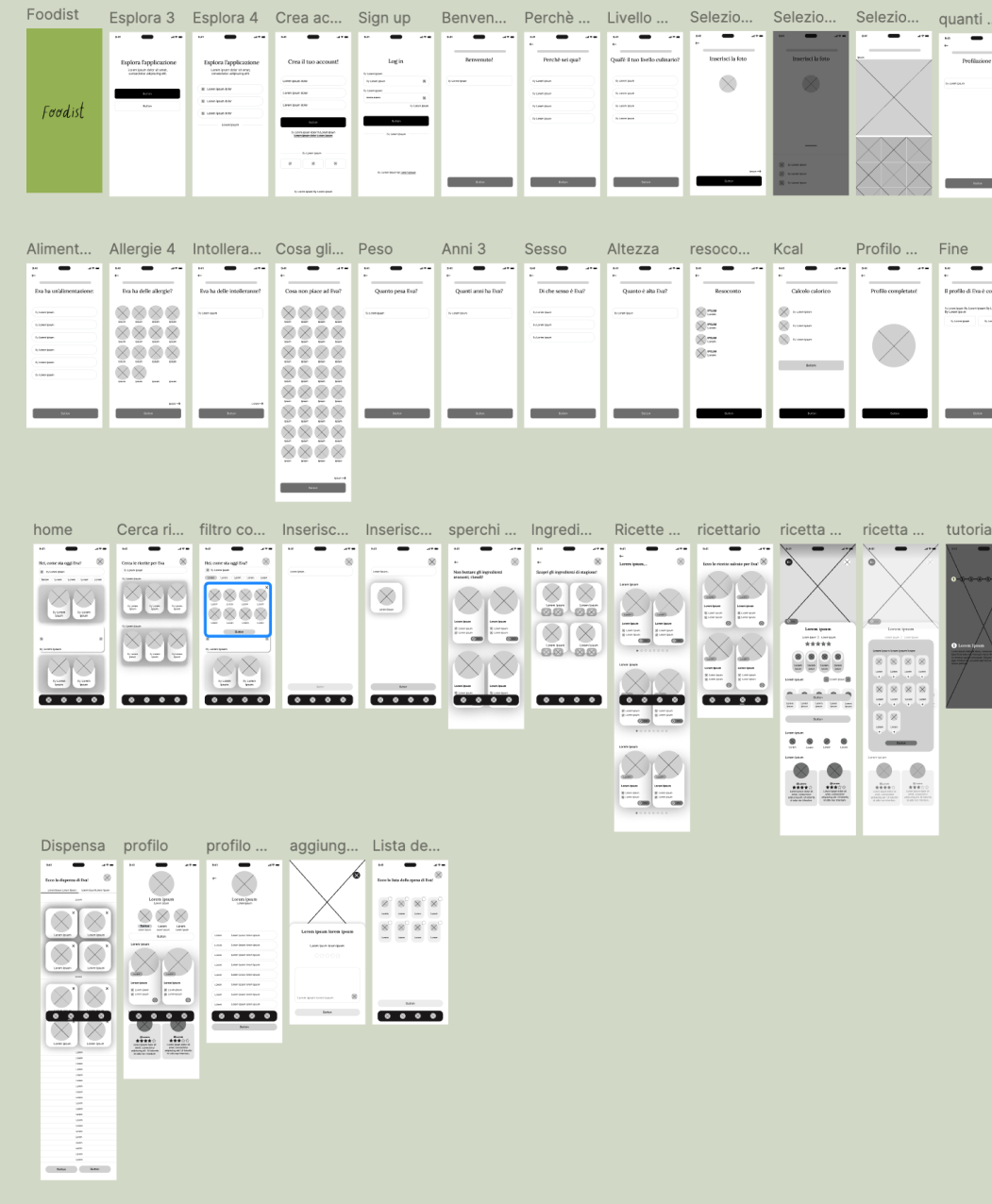
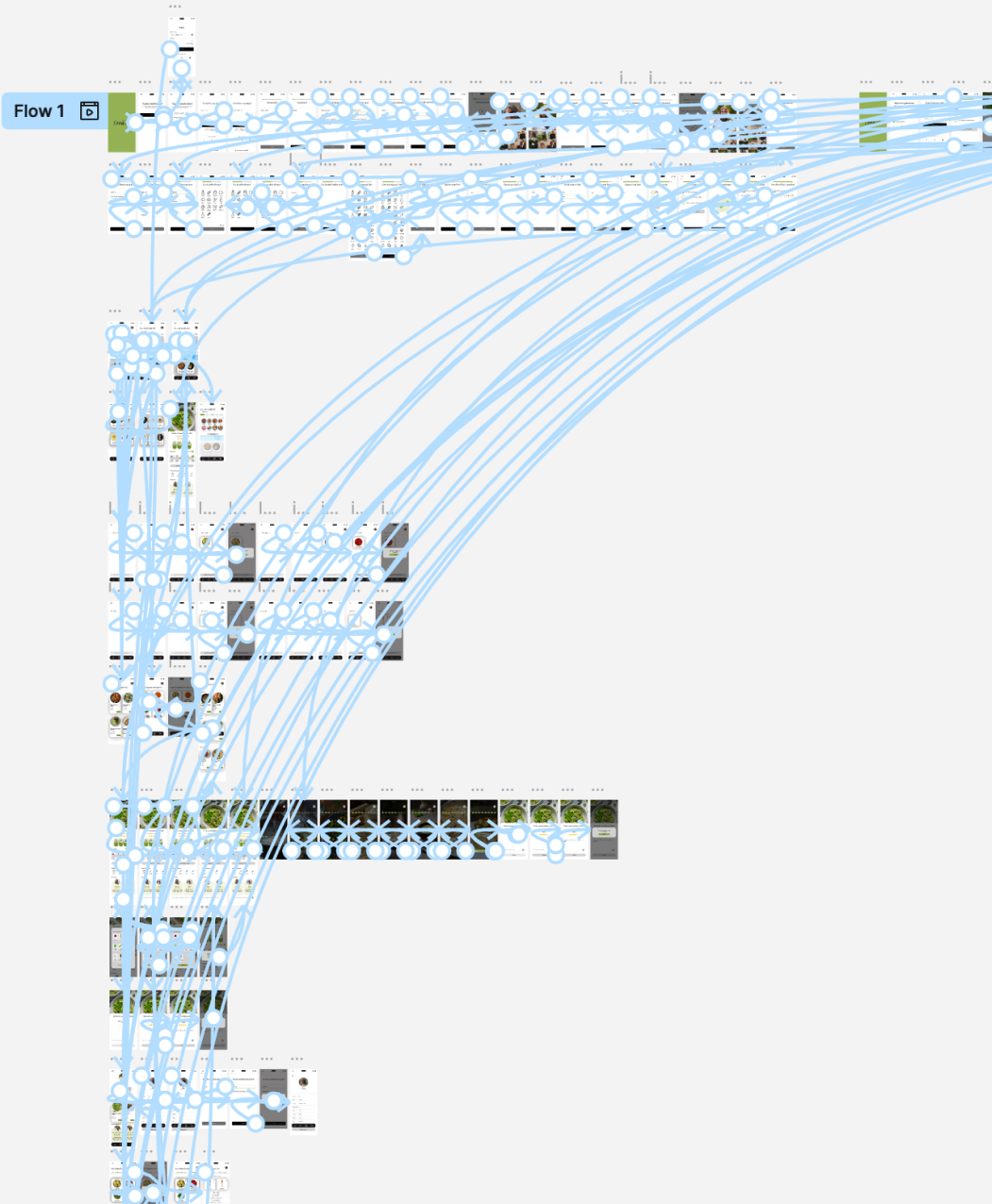
I explored the experience through sketching and wireframing, progressively defining the main interactions and flows.
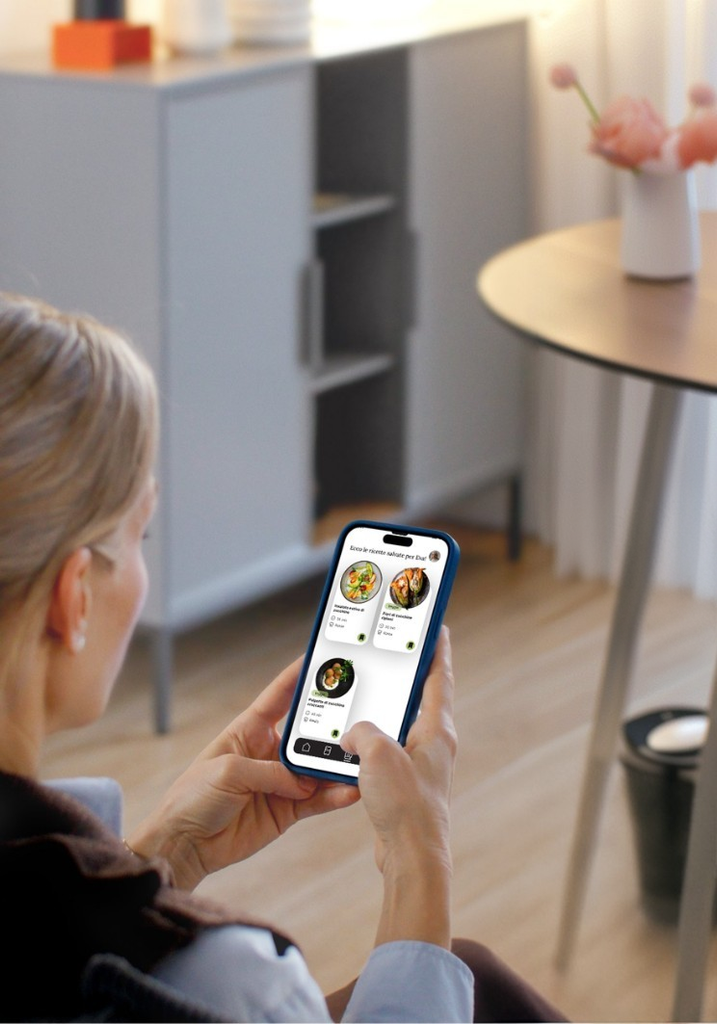
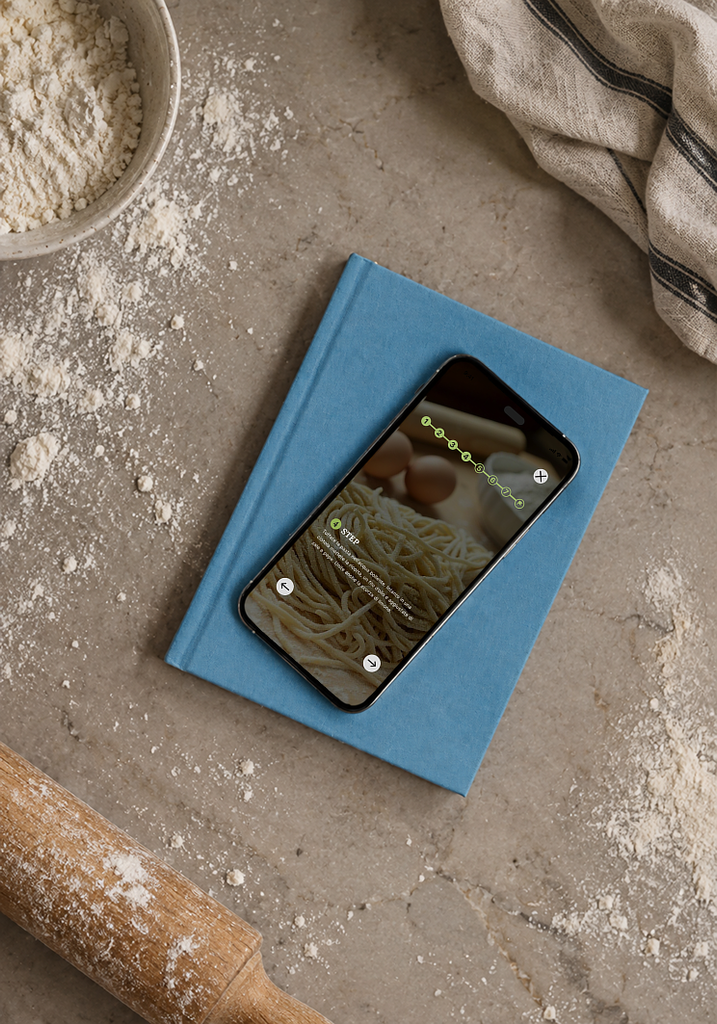
The interface brought together personalised recipe suggestions, pantry management, shopping lists, nutritional information, reminders and a Zero Waste area.
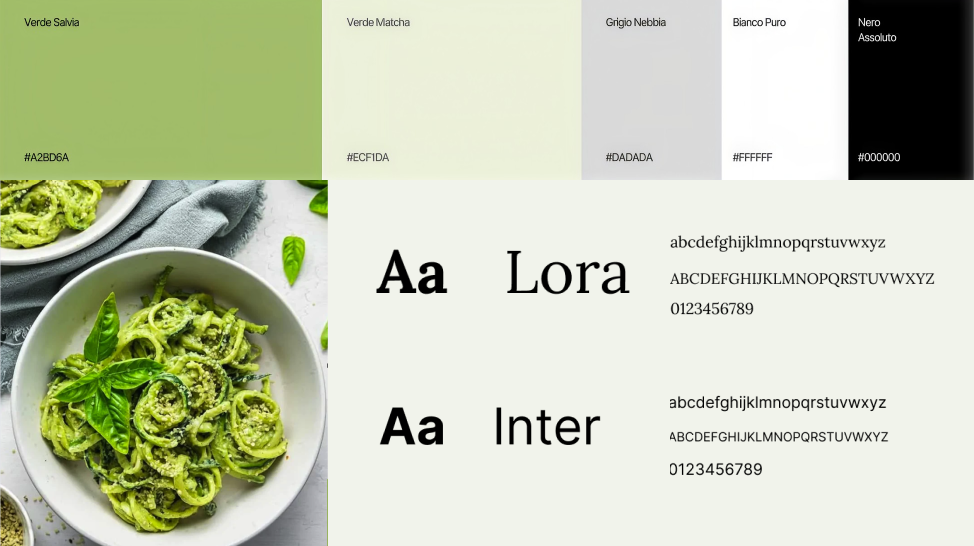
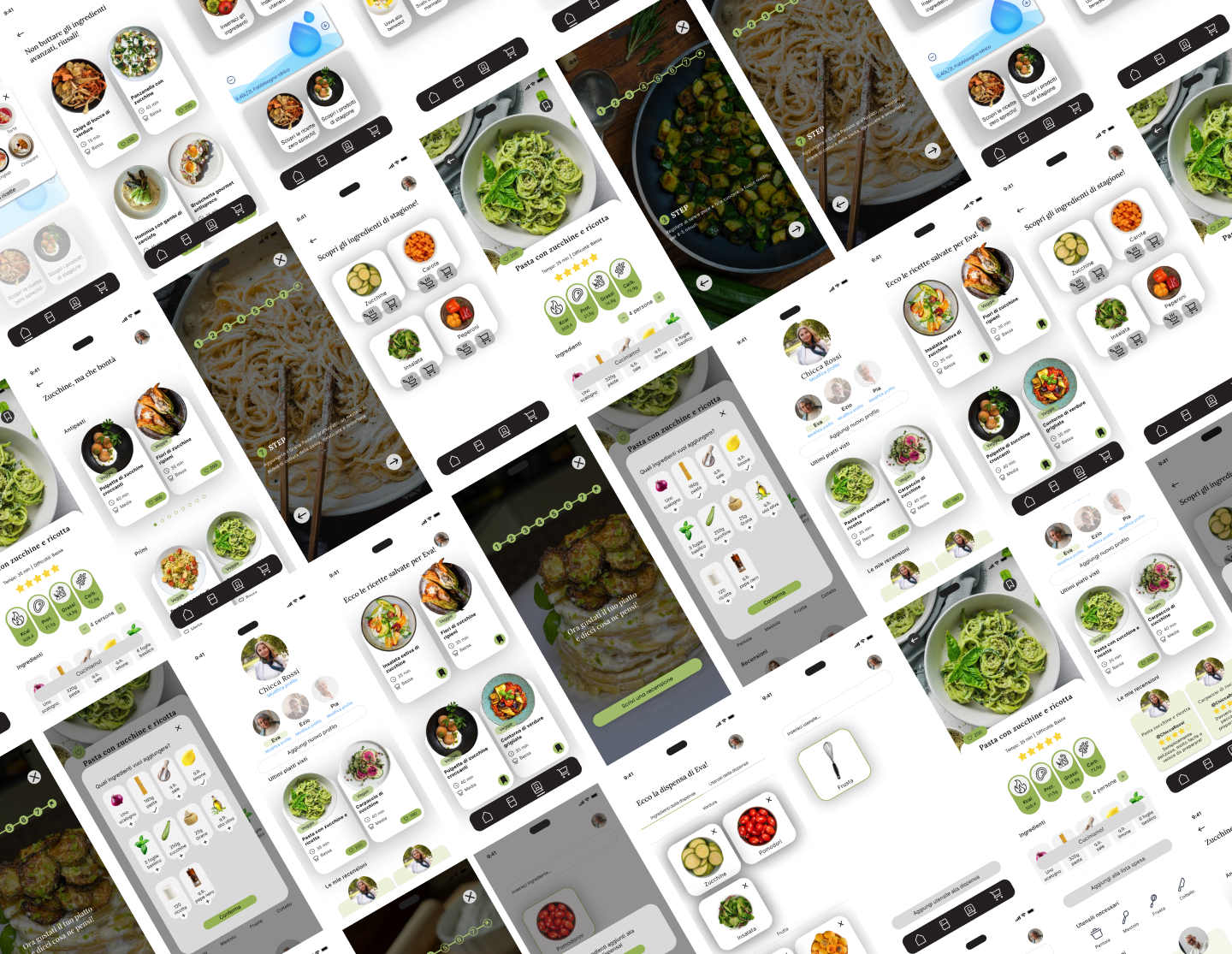
I then developed the UI, design system and high-fidelity prototype, paying particular attention to accessibility, including legibility, colour contrast and interaction clarity.
The aim was to make the experience feel supportive rather than demanding — helping users make decisions without asking them to manage more information.
⌁ Testing and iteration
Would people actually understand the experience?
Usability testing · Think-aloud · Cognitive walkthrough · Feedback · Iteration
Testing accompanied the design process across three rounds, moving from early low-fidelity interactions towards the final high-fidelity prototype.
The first round involved three participants completing 14 tasks through think-aloud testing. It revealed issues in terminology, navigation and several core interactions.
I then used a cognitive walkthrough to examine how easily users could understand and anticipate key actions within the experience.
The final high-fidelity prototype was tested with four participants across 14 tasks. The sessions helped refine the pantry interaction, profile management, feedback and other details that were not immediately visible during the initial design.
Each round informed the next, allowing the experience to become progressively clearer and more intuitive.
⌁ Outcome
From meal planning to a connected experience
Foodist became a high-fidelity interactive Figma prototype designed around the everyday reality of informal caregivers.
The final experience connects recipes, pantry, shopping and personalisation, allowing information to move between different parts of the system instead of requiring users to manage each task separately.
The result is a food experience designed not only to help people decide what to cook, but to reduce the cognitive effort surrounding that decision.
I worked across the entire design process — from research and problem definition to information architecture, interaction design, UI, prototyping and usability testing.
⌁ TAKEAWAY
Designing for less mental effort
Foodist reinforced the idea that good interaction design is not necessarily about adding more functionality.
Sometimes the most valuable intervention is to connect information that people are already managing and make the next step feel obvious.
The project pushed me to think about how research can directly shape interaction decisions — not as a separate phase before design, but as something that continues to inform the experience throughout the process.
⌁ NEW CONNECTIONS
Let’s create something
useful
Every project starts with a question, a conversation, or simply the curiosity to see what could be done differently.
Have an idea, a project, or just something you’d like to talk about?